
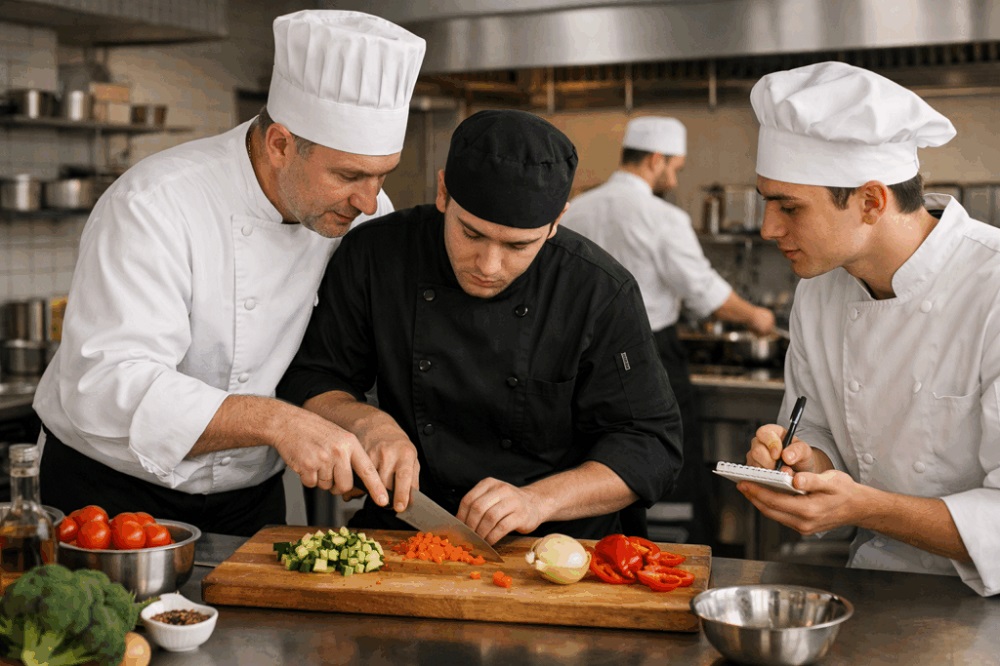
Culinary precision is one of the defining qualities of a skilled chef. It influences flavor consistency, plating quality, kitchen efficiency, and overall guest satisfaction. Professional kitchens rely on structured training techniques that develop accuracy, timing awareness, ingredient control, and disciplined execution under pressure.
The following training methods are widely used in professional culinary environments to strengthen technique and build long term confidence in the kitchen.
Knife Skills Mastery as the Foundation of Accuracy
Knife control is one of the earliest and most important precision skills chefs develop. Consistent cutting improves cooking speed, ensures even texture, and supports uniform presentation.
Training techniques that strengthen knife skills include:
- Practicing standard cuts such as julienne, brunoise, and chiffonade
- Maintaining consistent cutting speed with accuracy
- Using proper grip and posture
- Learning safe handling techniques for efficiency
- Repeating vegetable preparation drills daily
Consistent knife practice improves both safety and workflow reliability in busy kitchens.
Ingredient Measurement and Portion Control Training
Precision in ingredient measurement ensures consistency across multiple servings. Professional chefs train to control both quantity and balance without relying entirely on guesswork.
Common portion control exercises include:
- Practicing measurement using kitchen scales
- Preparing identical servings repeatedly
- Learning visual portion estimation techniques
- Standardizing seasoning quantities
- Maintaining recipe consistency across batches
These habits support quality control in both small kitchens and large scale catering operations.
Timing Coordination Through Repetition Drills
Efficient timing separates experienced chefs from beginners. Training kitchens emphasize repetition so chefs learn how long ingredients take to cook and how to coordinate multiple tasks simultaneously.
Effective timing training methods include:
- Simulated service preparation sessions
- Multi dish cooking exercises under time limits
- Sequencing ingredient preparation tasks
- Monitoring heat levels across different cooking stations
- Practicing coordinated plating schedules
With repeated exposure, chefs begin to anticipate cooking timelines naturally rather than reacting to them.
Temperature Awareness and Heat Control Practice
Understanding temperature behavior is essential for achieving predictable results. Precision training focuses on developing awareness of how ingredients respond to different heat levels.
Training exercises often include:
- Practicing sauté techniques at controlled temperatures
- Monitoring roasting adjustments during cooking
- Using thermometers for protein preparation accuracy
- Observing changes in texture during heating
- Learning heat distribution across cookware types
Temperature awareness helps chefs maintain quality across repeated service cycles.
Structured Plating Practice for Visual Consistency
Plating is a visual expression of culinary discipline. Precision plating training ensures each dish meets presentation standards regardless of service pressure.
Key plating practice methods include:
- Repeating identical plating layouts
- Practicing garnish placement techniques
- Learning balance between color and texture
- Maintaining clean plate edges during service
- Coordinating plating speed with service timing
Consistent plating improves both guest perception and brand identity in professional kitchens.
Sensory Training to Improve Flavor Judgment
Culinary precision depends not only on technique but also on sensory awareness. Chefs train their palate to identify subtle flavor differences and adjust seasoning confidently.
Sensory training exercises include:
- Blind tasting ingredient comparisons
- Evaluating spice balance adjustments
- Practicing aroma recognition
- Testing texture variations across cooking methods
- Learning acidity and sweetness balance control
Stronger sensory awareness helps chefs maintain consistent flavor profiles across multiple service sessions.
Workflow Organization Through Station Training
Professional kitchens operate through clearly defined stations. Structured station training teaches chefs how to manage responsibility efficiently within their assigned role.
Station training often includes:
- Preparing mise en place before service begins
- Organizing tools for quick access
- Maintaining clean work surfaces
- Coordinating with adjacent stations
- Managing ingredient replenishment efficiently
Organized stations improve accuracy while reducing service time pressure.
Communication Drills That Support Kitchen Coordination
Precision in professional kitchens depends heavily on teamwork. Clear communication ensures orders are executed correctly and efficiently.
Communication training techniques include:
- Call and response order confirmation practice
- Coordinated service timing announcements
- Clear labeling of prepared ingredients
- Delegation exercises during mock service sessions
- Verbal coordination between preparation teams
Strong communication habits reduce mistakes during high volume service periods.
FAQ Section
How long does it take to develop strong culinary precision skills
Most chefs begin showing measurable improvement within several months of structured practice, but mastery develops through years of consistent repetition and professional experience.
Are knife skills more important than cooking techniques for beginners
Knife skills are often prioritized early because they influence safety, efficiency, and ingredient preparation quality across all cooking methods.
Can culinary precision be improved without attending culinary school
Yes many chefs strengthen precision through apprenticeships, guided kitchen practice, and structured self training routines.
Why is repetition important in chef training
Repetition builds muscle memory, improves speed, and helps chefs perform accurately even during high pressure service environments.
How does sensory training support professional cooking accuracy
Sensory training strengthens the ability to evaluate seasoning balance, texture changes, and ingredient freshness during preparation.
What role does workstation organization play in culinary precision
Organized workstations reduce errors, improve efficiency, and support consistent cooking performance during busy service periods.
Do experienced chefs continue precision training throughout their careers
Yes professional chefs regularly refine techniques to maintain consistency, adapt to new menus, and improve kitchen performance standards.
